


INTERVIEW: Brian O’Malley
- By @TheBlueTook
Last year, I had the pleasure of a quick chat with Irish filmmaker Brian O’Malley, who was just about to take his feature debut Let Us Prey on the festival circuit.
His film was so successful, and his schedule so hectic, that we never really got around to a more formal interview. Thankfully, I caught up with Brian again recently, fresh from me seeing Let Us Prey for myself…
***
Brian, thanks so much for sharing your precious time with us. OK, to get our readers up to speed, your first full-feature is imminent (more later), but you didn’t really start your short-film career in horror did you?
Let Us Prey is actually the first thing I’ve done in the horror genre. I’m a huge genre fan in general, with personal faves in everything from Film Noir, to westerns, to sci-fi. In terms of the horror genre specifically I’ve always been drawn to the likes of Suspiria, Halloween, The Fog, The Exorcist and The Keep. I’m a huge Michael Mann fan, which is how I discovered The Keep. I started with Thief on VHS, then quickly followed with the cinematic release of Heat. That love of directors who appear to design their movies from shot to shot, and create a dense tone with character and story also meant David Fincher was on my Radar right from Alien 3 onwards. So between those two directors I developed an interest in heavy weight crime movies also.
Screwback was a short crime film I wrote based on a feature length screenplay called Sisk. This script is about an ageing gangster dying of a brain tumor who returns to Ireland after a 30 year exile to atone for his sins. It’s all very Shakespearean and dark, set against a crime backdrop. This was co-written with Terry McMahon (Charlie Cassanova and Patricks Day) and Mark O’Rowe (Intermission, Perriers Bounty, Boy A, Broken, Star of the Sea) and it won several screenwriting awards including the Hartley Merrill International screenwriting prize in Cannes in 2005.
So I took the main character of Harry Sisk, and some of its themes, and made the short film Screwback to demonstrate the tone and style of the film.
So, Screwback was filmed nice and handy in Ireland and received well. Most people would have been quite content with that for their first real go and maybe stayed in their comfort zone for a bit. Not you. You decided to follow this up with a drama and fucked right off to Thailand!
Screwback served its purpose well and by 2006 Sisk was in development with a major production company. However with the global financial crash, films became difficult to finance, and in 2009 we fell victim to that. So I found myself without a drama project.
I had been making TV commercials for an Irish NGO called Trociare and this had taken us to far flung corners of the earth where we had done some really nice work using non actors and limited resources. Myself and my producer Gary Moore felt we could tap into this production method and do a really interesting and unexpected short film. Gary was doing photographic work in a Burmese refugee camp in southern Thailand and interviewed a number of Burmese people about their experiences and how they ended up in Thailand. From that was born a short story based on true accounts from three different women. I took this story and wrote a short screenplay and we were very fortunate to receive funding from the Irish Film Board to shoot the film in Thailand.
So in 2010 we went to Thailand and shot Crossing Salween, a short film about a young Burmese girl whose family are massacred by the Military Junta, forcing her on a journey across Burma in an attempt to find freedom in Thailand. It’s a beautiful story and a film I’m deeply proud of. We’ve since written a feature length screenplay based on the short film and are in financing stages of production.
I was then lucky to be approached with the script for Let Us Prey by Fantastic Films in Ireland and Makar Productions in Scotland. The Irish producers, John McDonald and Brendan McCarthy, were guys I knew well and they were fans of Screwback. They specifically wanted a genre director to direct the film and offered me the gig. I was incredibly eager to get a feature film made, and when the opportunity arrived, I embraced it and made it my own.
For someone who’s started with only 2 short films to their name before their first feature, you’ve managed to nab the excellent Liam Cunningham (Dog Soldiers, Safe House, Game Of Thrones, War Horse). How did you snare him?
I managed to get his email address from an assistant director I knew and sent him the screenplay for Screwback in 2004. He loved it and agreed to play the lead role of Harry Sisk. He’s so brilliant in that short, I got really lucky. He brings a gravitas to the film that really helped.
When Sisk was in pre production we then cast him in the same role, but the rest is history. To this day it’s a role he still wants to play and he has a deep passion to see it happen at some point in the future.
Can you give our readers the low-down about Let Us Prey?
A small shithole of a Scottish town, at the arse end of the earth, where a group of despicable sinners find themselves in the one place on the one night. They’re joined in a Police Station by a rookie cop named Rachel and a mysterious stranger known only as Six, who seems to know their inner demons. As the clock ticks towards midnight Rachel finds herself in a fight for her life as one by one Six encourages each of the Police Stations inhabitants to reveal their true nature.
It’s very gothic and operatic, which relies hugely on character to drive the film forward. I was drawn to this and the limited locations as I knew it presented an opportunity to craft something really interesting. Had the script called for 50 locations it would have been a crash bang wallop shoot, which makes it difficult to put your directorial mark on. But with 90% of the film taking place inside the police station, I knew I’d have time to craft the film, light it well and get great performances.
PollyAnna McIntosh too – wow! Amongst her CV is The Woman, which was excellent. What a scoop for you! Who did the contacting for that piece of casting?
The Scottish producer Eddie Dick suggested her to me. I looked at her first in Bob Servant: Independent and thought she was great. I then looked at her in The Woman and thought she was fierce. I then met her and found she was sensitive and very thoughtful in terms of character. I really wanted whomever played Rachel to have a vulnerability about them, but with a physical presence that suggested they could take whatever was thrown at them. I always loved how Ripley in Alien is a reluctant hero, who find things very difficult, but still battles through. I wanted something very similar for Rachel and I found it in Pollyanna.
There’s a lot thrown at her in the film, both emotionally and physically. Pollyanna really plays it as though she finds the entire evening incredibly difficult, but fights on through. That for me is truly heroic, someone who doesn’t want to be there, but endures nonetheless. I think she’s terrific in the role.
As well as those 2 you’ve also got a double BAFTA winner in the shape of Bryan Larkin, and Niall Fulton, who’s worked on Cloud Atlas and The Acid House…
I was unbelievably fortunate with my cast. I did go to great lengths to make sure every actor we cast was brilliant, but I ended up with a far superior bunch of vagabonds than I could have hoped for.
Often in Horror movies the supporting cast serve the purpose of fodder for inventive deaths. The same isn’t untrue of this film, but I always noticed when growing up watching over 18’s horrors with my mates, that even in low budget films, if supporting cast were played by strong actors they could humanise their roles, and embellish them with attributes that made them interesting. So when they did meet their impending doom, there was a sense of their loss. That’s when horror is at its strongest, when you care about the characters, something often overlooked in low budget horror.
So I made it my business in this film to get actors who could bring something other than what simply existed on the page, and I think every one of them delivered.
The film was fairly low budget, and despite it looking fantastic, thanks to the genius of Piers McGrail Dop, we had very little time each day. I knew if I found myself with 30 mins to shoot a 3 page scene (which happened a few times) if I just pointed the camera at great actors, it would still hold up, even if it didn’t have the craft I might have liked.
As it happened, due to having such a strong cast, I did get good coverage most of the time, but everything was led by the cast and what their characters needed. They are the core of the film, the visuals are what give it the tone and atmosphere.
Its style seemed to range from 60’s Hammer to 70’s/80’s grindhouse to slick big-budget horror, but still managed to look unique. Who’s influenced you, cinematically?
Actually Hammer horror and Grindhouse have had very little presence in my film education. I don’t gravitate towards them and know little about them to be honest, other than the very obvious stuff. My influences are more specifically directors than genres.
When I was 21 I decided I wanted to be a Director, despite having no idea what they actually did. So despite devouring movies at a huge pace, it wasn’t until I discovered Sergio Leone that everything became clear. I was fortunate to be handed a VHS of Once Upon A Time In The West by the writer Mark O’Rowe (whilst we were both working for an Irish supermarket chain) and that movie became my film school. Due to the operatic nature of the film making and camera moves in relation to the blocking of the actors, and the accompanying music, for the first time I could identify exactly what the director was doing and why.
From there I discovered Mann, Fincher and other directors who take a very considered approach to their film making. Whilst all three are very different, there is a through-line that links them in terms of that sense when you watch their films that nothing is happening by chance. Everything is thought about, planned, and executed with an end goal in mind.
In terms of Hammer Horror and Grindhouse, I think any similarities might simply be my commitment to what the script required. When you’re making a horror and it calls for someone to be impaled on the leg of a table, you have two choices. Skirt around it, or commit. When I felt the violence needed to be committed to I went for it, resulting in some fairly shocking scenes. However if you look closely, you’ll see in almost every instance the moment of impact is implied, or viewed from behind, rather than implicitly shown. I show the aftermath, but the actual moment of violence is almost always obscured. Suggestion is always more powerful than spoon feeding, however I will concede that the finished film is fairly graphic in its violence!
Going back to PollyAnna’s The Woman, and more specifically director Lucky McKee (who’s a big favourite of mine), who do you think is breaking ground, either in independent terms or big budget?
Whilst doing the Horror festival rounds there was one film that really stood out to me as something special, and a director to watch. It Follows is a modern classic and David Robert Mitchell is someone I’ll be looking out for in the future. I found this film truly unsettling, and I have to confess I was genuinely envious of the utter simplicity of the films concept. Its a bit of a horror masterpiece. Expect to see ‘It Follows 2’, ‘It Follows 3’….
We ask this next one a lot: Do you think big-budget is stifling indie?
Unfortunately this is true. But it’s not necessarily the fault of the studios. When you make a 30 million dollar movie that turns up on torrents before it hits the theatre, DVD or VOD you have to rethink you’re strategy or you’re going to go out of business. The result has been the studios investing mainly in star-led big budget sequels and franchises that promise spectacles so great that people flock to the cinemas in droves to see them.
So what you have now are sub 3 million dollar movies, and movies that cost 80 million dollars plus. There’s very little in between, and it’s the in between that the indies like David Lynch used to thrive on. The public are starting to see the price of choosing to steal movies is very very small movies, and very very big movies, but little in between. And it’s the in between where the really interesting stuff was always made. Terminator, Alien, Blue Velvet, Fargo etc, these are all movies where the budget was high enough to make something really special, but not so high that the studios felt the need to interfere.
I’m not suggesting that the in between doesn’t exist. Little Miss Sunshine, Juno, Dallas Buyers Club, these are all movies that exist in between the very big and the very small, but it’s becoming harder to get these kind of films made.
However those mid budget indie projects haven’t just gone away, many of them have just moved to TV. True Detective was one such movie, which then found its life on TV as a 6 part TV series. There’s nothing wrong with this, TV is the best it’s ever been, but people don’t return to TV like they do cinema, they tend to watch it once, which is a shame. We may find that this golden era of TV is embraced in the future by film fans and students in the way we embrace films from other eras in cinema, time will tell. I hope they do and I can certainly see myself returning to Sopranos in another 5 years. The only problem is the commitment. If I want to revisit Blade Runner, I need about 2 hours, if I want to revisit Breaking Bad, I need a month.
You’ve recently taken Let Us Prey to BIFFF (Brussels International Fantastic Film Festival) and Edinburgh – they must have been great experiences?
BIFFF was our world premiere, and we won the Melies d’Argent, which was a terrific start to the film’s life. This was followed by 11 months of great festivals, with my personal fave being Fantastic Fest in Texas where I got to meet a director I hugely admire – Richard Stanley.
Richard was there to promote Island of Lost Souls and I got chatting with him outside the cinema one morning. Hardware blew me away when it first came out, and Dust Devil took his unique cinematic vision to another level. A true visionary and a real nice guy.
So what’s next, Brian? Most people would keep it safe, but I presume your next one’s filmed on the actual moon…
Next up is The Lost Station, a ghost story set in the London Underground, followed by a feature length version of Crossing Salween. However I’d also really like Sisk to see the light of day, so I’m looking to hook up with someone who can help get that made.
Will you spread The Slaughtered Bird word for us, Mr O’M?
I will indeed. I look forward to posting this on Facebook and Twitter!
REVIEW: Ghoul
 Notorious serial killer Andrei Chikatilo – executed by gunshot in 1994 for the murder and sexual assault of at least 52 women and children – is the vehicle for Petr Jakl’s new indie horror GHOUL.
REVIEW: Once Monster
 Get ready for something very, very special.
INTERVIEW: Jason Aron
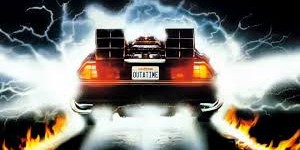 "Where we're going we don't need roads"...
'Back to the Future' is one of my all time favourite films...
"Where we're going we don't need roads"...
'Back to the Future' is one of my all time favourite films...
INTERVIEW: Alan & IGG of Ramon Film Productions, Uganda
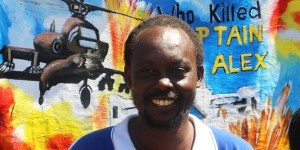 - By @TheBlueTook
A few months back, I stumbled across a film clip for an indie production with a difference. The WHO KILLED CAPTAIN ALEX trailer not only made me blissfully happy (you'll see why!
- By @TheBlueTook
A few months back, I stumbled across a film clip for an indie production with a difference. The WHO KILLED CAPTAIN ALEX trailer not only made me blissfully happy (you'll see why!
Leave a Reply